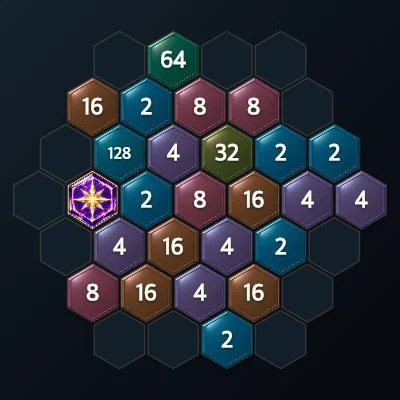
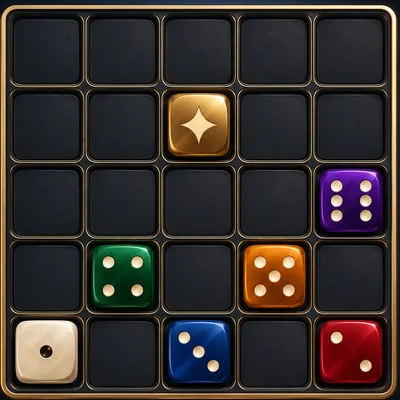
About the game
Game idea
Number Drop combines falling numbers with matching-value merges. You choose the column, while occupied spaces and neighbours shape what happens next.
What matters
Consider not only where a tile lands but also which larger value a merge will create. Suitable neighbours can prepare a chain of further connections.
This version
Five columns provide a compact planning space. Horizontal and vertical links can trigger chains, while spare room preserves options for later numbers.
Number Drop: how to play and options
Goal and key rules
Drop new numbers into one of five columns. Equal horizontal or vertical neighbours can merge successively with the new tile, doubling its value. The sum of all numbers left on the board is your score.
Controls
Choose a column with space. The tile lands in its lowest empty cell; a full column accepts nothing. After merging, falling tiles can create another matching neighbour.
Playing tips
Place large values so that new small numbers can still connect. A free column gives you room to build. When planning chains, consider where the growing tile will finish.
Settings and variants
Width stays at five columns while height is selectable. More rows provide more storage. Diagonals do not merge; play ends when no column has room.
Display and sound
The timer display can be shown or hidden. Reduced motion limits effects while keeping necessary game movement visible. Sound can be switched on or off independently.
On a new page visit, Start game begins a fresh round using your saved preferences. An abandoned round does not resume automatically. Game information explains further scoring details and available assists.